Buy come2europe.eu ?
We are moving the project
come2europe.eu .
Are you interested in purchasing the domain
come2europe.eu ?
domain@kv-gmbh.de · 0541-91531010
Buy come2europe.eu ?
Which travel lens is better?
The best travel lens depends on your specific needs and preferences. If you prioritize versatility and convenience, a zoom lens with a wide focal range, such as an 18-200mm or 24-105mm, may be the better option as it allows you to capture a variety of subjects without needing to change lenses frequently. On the other hand, if you value image quality and low light performance, a prime lens with a wide aperture, such as a 35mm or 50mm, may be the better choice. Consider factors such as the types of subjects you plan to shoot, the weight and size of the lens, and your budget when making your decision. **
What is a good travel lens?
A good travel lens is one that is versatile and can cover a wide range of focal lengths. A zoom lens with a focal length range of around 18-200mm or 24-105mm is a popular choice for travel photography, as it allows you to capture a variety of subjects from wide-angle landscapes to close-up portraits without having to change lenses frequently. Additionally, a lens with image stabilization can be beneficial for shooting in various lighting conditions and while on the move. Finally, a compact and lightweight design is important for travel lenses to minimize the amount of gear you have to carry. **


Similar search terms for CARPOINT-0413904-Lens
Top-Angebote
Products related to CARPOINT-0413904-Lens:
-
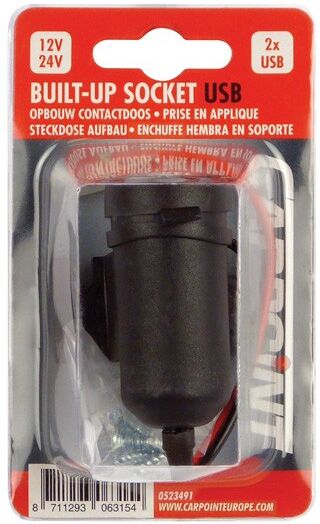
CARPOINT 0523407 SocketColour: black; Material: Plastic; Supplementary Article / Supplementary Info: with stopper lid; Voltage [V]: 12; Current Strength to [A]: 10; Number of mounting bores: 2; Plug Type: Male, Blade Terminal; Housing Type: Housing with Plastic Lid; Mounting Type: Bolted11,49 £*Shipping: 8,45 £Secure redirect to the provider
-
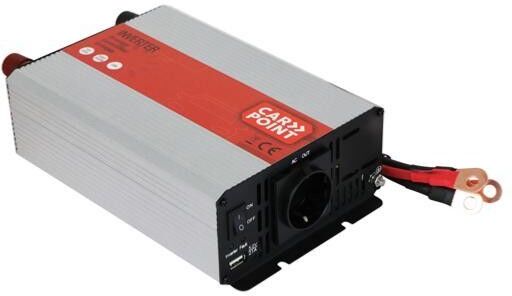
CARPOINT 0510353 InverterInput Voltage [V]: 12; Output Voltage [V]: 230; Rated Power [W]: 1000; Switching Capacity [W]: max 2000; Supplementary Article / Supplementary Info Info 2: with fuse; Connectors/Plugs: USB; Number of sockets (230V/AC): 1; Connection type outlet: Shockproof socket; Output current USB [mA]: 2.1; Output voltage USB [V]: 5; Surge protection: Yes; Gauge: with LED display; Length [mm]: 210; Width [mm]: 150; Height: 70; Cooling Type: air-cooled; Colour: grey, black; Cable Colour: red/black; Output waveform: DC; conversion: 12V to 230V170,99 £*Shipping: 1,99 £Secure redirect to the provider


-
Which lens mount does this lens have?
This lens has a Canon EF lens mount. This means it is compatible with Canon DSLR cameras that use the EF mount, as well as some mirrorless cameras with an EF to RF mount adapter. The EF mount is a widely used and versatile mount, allowing for compatibility with a wide range of Canon cameras. **
-
Is there a lens hood for the lens?
Yes, there is a lens hood available for the lens. A lens hood is a useful accessory that helps to reduce lens flare and glare by blocking unwanted light from entering the lens. It can also provide some protection for the front element of the lens. It is recommended to use a lens hood whenever possible to improve the overall image quality. **
-
What does the lens do during autofocus 2 lens?
During autofocus, the lens in a camera with autofocus 2 technology adjusts its position to bring the subject into sharp focus. This is achieved through the movement of internal lens elements controlled by the camera's autofocus system. The lens continuously makes small adjustments to its focus position until the subject is in focus, allowing for quick and accurate focusing. This technology is particularly useful for capturing fast-moving subjects or for ensuring sharp focus in challenging lighting conditions. **
-
Is the converging lens the same as the diverging lens?
No, a converging lens and a diverging lens are not the same. A converging lens is thicker in the middle and causes parallel rays of light to converge at a focal point, while a diverging lens is thinner in the middle and causes parallel rays of light to diverge. Converging lenses are used to create real images, while diverging lenses are used to create virtual images. Therefore, the two types of lenses have different optical properties and applications. **

Which type of lens is better suited for wildlife photography: a prime lens or a zoom lens?
A zoom lens is generally better suited for wildlife photography because it offers versatility in framing the subject without having to physically move closer or further away. This is especially important when photographing unpredictable wildlife in their natural habitat. However, a prime lens can also be effective for wildlife photography, particularly for capturing specific details or in situations where a lighter and more compact lens is preferred. Ultimately, the choice between a prime lens and a zoom lens for wildlife photography depends on the specific needs and preferences of the photographer. **
Which lens is suitable for the Sony A6000 for travel videos?
For travel videos with the Sony A6000, a versatile lens like the Sony E 18-105mm f/4 G OSS would be a great choice. This lens offers a wide focal range, allowing you to capture a variety of shots without needing to switch lenses frequently. The constant aperture of f/4 ensures consistent exposure throughout the zoom range, making it ideal for capturing videos in different lighting conditions. Additionally, the built-in Optical SteadyShot image stabilization helps to reduce camera shake, resulting in smoother and more stable footage. **
Top-Angebote
Products related to CARPOINT-0413904-Lens:
-
CARPOINT 0523407 SocketColour: black; Material: Plastic; Supplementary Article / Supplementary Info: with stopper lid; Voltage [V]: 12; Current Strength to [A]: 10; Number of mounting bores: 2; Plug Type: Male, Blade Terminal; Housing Type: Housing with Plastic Lid; Mounting Type: Bolted11,49 £*Shipping: 8,45 £Secure redirect to the provider
-
Which travel lens is better?
The best travel lens depends on your specific needs and preferences. If you prioritize versatility and convenience, a zoom lens with a wide focal range, such as an 18-200mm or 24-105mm, may be the better option as it allows you to capture a variety of subjects without needing to change lenses frequently. On the other hand, if you value image quality and low light performance, a prime lens with a wide aperture, such as a 35mm or 50mm, may be the better choice. Consider factors such as the types of subjects you plan to shoot, the weight and size of the lens, and your budget when making your decision. **
-
What is a good travel lens?
A good travel lens is one that is versatile and can cover a wide range of focal lengths. A zoom lens with a focal length range of around 18-200mm or 24-105mm is a popular choice for travel photography, as it allows you to capture a variety of subjects from wide-angle landscapes to close-up portraits without having to change lenses frequently. Additionally, a lens with image stabilization can be beneficial for shooting in various lighting conditions and while on the move. Finally, a compact and lightweight design is important for travel lenses to minimize the amount of gear you have to carry. **
-
Which lens mount does this lens have?
This lens has a Canon EF lens mount. This means it is compatible with Canon DSLR cameras that use the EF mount, as well as some mirrorless cameras with an EF to RF mount adapter. The EF mount is a widely used and versatile mount, allowing for compatibility with a wide range of Canon cameras. **
-
Is there a lens hood for the lens?
Yes, there is a lens hood available for the lens. A lens hood is a useful accessory that helps to reduce lens flare and glare by blocking unwanted light from entering the lens. It can also provide some protection for the front element of the lens. It is recommended to use a lens hood whenever possible to improve the overall image quality. **
Similar search terms for CARPOINT-0413904-Lens
-
CARPOINT 0510353 InverterInput Voltage [V]: 12; Output Voltage [V]: 230; Rated Power [W]: 1000; Switching Capacity [W]: max 2000; Supplementary Article / Supplementary Info Info 2: with fuse; Connectors/Plugs: USB; Number of sockets (230V/AC): 1; Connection type outlet: Shockproof socket; Output current USB [mA]: 2.1; Output voltage USB [V]: 5; Surge protection: Yes; Gauge: with LED display; Length [mm]: 210; Width [mm]: 150; Height: 70; Cooling Type: air-cooled; Colour: grey, black; Cable Colour: red/black; Output waveform: DC; conversion: 12V to 230V170,99 £*Shipping: 1,99 £Secure redirect to the provider
-
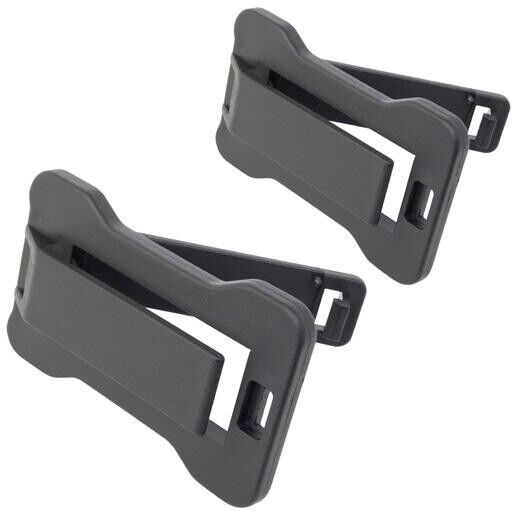
CARPOINT 0928080 Bungee cordsmax. length [mm]: 550; Supplementary Article / Supplementary Info Info 2: with hook; Number of hooks: 8; adjustable: adjustable; Diameter: 8; Length [mm]: 300; Registration Type: with TÜV® certificate; Tensile Force [N]: 70; Shape: Flexible; Colour: black; Features: with hook6,29 £*Shipping: 8,45 £Secure redirect to the provider
-
What does the lens do during autofocus 2 lens?
During autofocus, the lens in a camera with autofocus 2 technology adjusts its position to bring the subject into sharp focus. This is achieved through the movement of internal lens elements controlled by the camera's autofocus system. The lens continuously makes small adjustments to its focus position until the subject is in focus, allowing for quick and accurate focusing. This technology is particularly useful for capturing fast-moving subjects or for ensuring sharp focus in challenging lighting conditions. **
-
Is the converging lens the same as the diverging lens?
No, a converging lens and a diverging lens are not the same. A converging lens is thicker in the middle and causes parallel rays of light to converge at a focal point, while a diverging lens is thinner in the middle and causes parallel rays of light to diverge. Converging lenses are used to create real images, while diverging lenses are used to create virtual images. Therefore, the two types of lenses have different optical properties and applications. **
-
Which type of lens is better suited for wildlife photography: a prime lens or a zoom lens?
A zoom lens is generally better suited for wildlife photography because it offers versatility in framing the subject without having to physically move closer or further away. This is especially important when photographing unpredictable wildlife in their natural habitat. However, a prime lens can also be effective for wildlife photography, particularly for capturing specific details or in situations where a lighter and more compact lens is preferred. Ultimately, the choice between a prime lens and a zoom lens for wildlife photography depends on the specific needs and preferences of the photographer. **
-
Which lens is suitable for the Sony A6000 for travel videos?
For travel videos with the Sony A6000, a versatile lens like the Sony E 18-105mm f/4 G OSS would be a great choice. This lens offers a wide focal range, allowing you to capture a variety of shots without needing to switch lenses frequently. The constant aperture of f/4 ensures consistent exposure throughout the zoom range, making it ideal for capturing videos in different lighting conditions. Additionally, the built-in Optical SteadyShot image stabilization helps to reduce camera shake, resulting in smoother and more stable footage. **
* All prices are inclusive of VAT and, if applicable, plus shipping costs. The offer information is based on the details provided by the respective shop and is updated through automated processes. Real-time updates do not occur, so deviations can occur in individual cases. ** Note: Parts of this content were created by AI.